



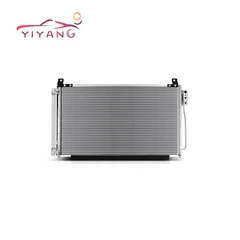


As a reputable car condenser supplier, I often encounter customers unsure whether their car condenser needs an upgrade. A car condenser is a crucial component of the vehicle's air - conditioning system, responsible for converting high - pressure, high - temperature refrigerant vapor into a liquid state. Over time, various factors can lead to the deterioration of the condenser's performance, and here are some signs that indicate it might be time for an upgrade.
1. Reduced Cooling Efficiency
One of the most obvious signs is a decrease in the cooling capacity of your car's air - conditioning system. If you find that the air blowing from the vents is not as cold as it used to be, even when the AC is set to the lowest temperature, it could be a sign of a failing condenser. The condenser works by dissipating heat from the refrigerant. When it starts to malfunction, it cannot effectively cool the refrigerant, resulting in warmer air being circulated inside the car.
For example, on a hot summer day, if your car's AC struggles to maintain a comfortable temperature, and you notice that the cooling effect is not as immediate or intense as before, it's time to consider the condition of your condenser. A worn - out condenser may not be able to handle the heat load, causing the refrigerant to remain at a higher temperature and reducing the overall cooling efficiency of the system.
2. Frequent Refrigerant Leaks
Refrigerant leaks are another tell - tale sign that your car condenser may need an upgrade. Refrigerant is the lifeblood of the air - conditioning system, and any loss of it can significantly affect the system's performance. If you notice puddles of a clear, oily liquid under your car near the front of the vehicle, it could be a sign of a refrigerant leak.
The condenser is a common site for leaks because it is exposed to various environmental factors, such as road debris, stones, and moisture. Over time, these elements can cause small holes or cracks in the condenser, allowing the refrigerant to escape. A small leak may not be immediately noticeable, but as it progresses, the amount of refrigerant in the system will decrease, leading to reduced cooling performance.
3. Strange Noises from the AC System
Unusual noises coming from your car's air - conditioning system can also indicate a problem with the condenser. When the condenser is working properly, it should operate quietly. However, if you hear rattling, hissing, or other strange noises when the AC is turned on, it could be a sign of a malfunction.
A rattling noise may be caused by loose components within the condenser, such as fins or brackets. A hissing noise, on the other hand, could indicate a refrigerant leak. These noises should not be ignored, as they can be early warning signs of a more serious problem.
4. Visible Physical Damage
Inspecting the condenser for visible physical damage is an important step in determining whether it needs an upgrade. Look for signs of dents, bent fins, or corrosion on the condenser. Dents can restrict the flow of air through the condenser, reducing its ability to dissipate heat. Bent fins can also disrupt the airflow, leading to poor cooling performance.
Corrosion is another common issue, especially in areas with high humidity or where road salt is used. Corrosion can weaken the condenser's structure and cause leaks over time. If you notice any of these physical damages, it's likely that the condenser needs to be replaced or upgraded.
5. Higher Compressor Load
The compressor is another vital component of the air - conditioning system, and it works in conjunction with the condenser. When the condenser is not functioning properly, the compressor has to work harder to maintain the desired cooling effect. This increased load on the compressor can lead to premature wear and tear, and it may even cause the compressor to fail.


If you notice that your car's engine is working harder when the AC is on, or if you hear the compressor running more frequently or for longer periods, it could be a sign that the condenser is not performing as it should. Upgrading the condenser can help reduce the load on the compressor and extend its lifespan.
6. Increased Energy Consumption
A failing condenser can also lead to increased energy consumption. When the condenser is not efficient at cooling the refrigerant, the air - conditioning system has to work harder to achieve the desired temperature. This means that more energy is required to run the system, which can result in higher fuel consumption.
If you notice that your car's fuel efficiency has decreased since you started using the AC more frequently, it could be due to a problem with the condenser. Upgrading to a more efficient condenser can help reduce energy consumption and save you money on fuel in the long run.
Specific Models and Their Condenser Needs
Different car models have different condenser requirements. For instance, the Infiniti QX50 Condenser is designed to meet the specific cooling needs of the Infiniti QX50. This model may require a condenser upgrade if it has been in use for a long time or if it has suffered from physical damage.
Similarly, the Infiniti Q50 Condenser is tailored to the Infiniti Q50. If you own an Infiniti Q50 and are experiencing any of the signs mentioned above, it might be time to consider upgrading its condenser.
The Nissan Rogue T33 Condenser is also a critical component for the Nissan Rogue T33. A malfunctioning condenser in this model can lead to a significant decrease in the air - conditioning performance, making it essential to keep an eye on its condition.
Conclusion
If you notice any of the signs mentioned above, it's important to take action promptly. Upgrading your car condenser can not only improve the cooling performance of your vehicle's air - conditioning system but also save you money in the long run by reducing energy consumption and preventing damage to other components.
As a car condenser supplier, we are committed to providing high - quality condensers that meet the specific needs of different car models. If you suspect that your car condenser needs an upgrade, don't hesitate to contact us for further discussion. We can offer professional advice and help you choose the right condenser for your vehicle.
References
- Automotive Air Conditioning Manual, various editions
- Technical documentation from major car manufacturers on air - conditioning systems.


