







Hey there, car enthusiasts! As a supplier of car radiator fans, I've seen firsthand how crucial these little devices are to a vehicle's cooling system. In this blog, I'm gonna break down how a car radiator fan interacts with the cooling system, so you can understand why it's such an important part of your ride.
The Basics of a Car Cooling System
Let's start with the basics. A car's cooling system is responsible for keeping the engine at a safe operating temperature. When the engine runs, it generates a ton of heat. If this heat isn't managed properly, it can cause serious damage to the engine, leading to costly repairs or even engine failure.
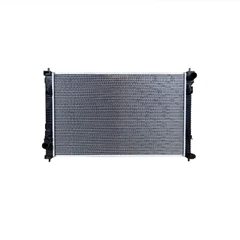
The main components of a cooling system include the radiator, water pump, thermostat, and of course, the radiator fan. The radiator is like a big heat exchanger. It's filled with coolant, which absorbs heat from the engine and then releases it into the air as it passes through the radiator's fins. The water pump circulates the coolant through the engine and the radiator, while the thermostat regulates the flow of coolant based on the engine's temperature.
How the Radiator Fan Fits In
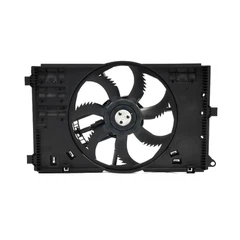
Now, let's talk about the radiator fan. The radiator fan's job is to help increase the airflow through the radiator. When the car is moving, there's usually enough airflow from the motion of the vehicle to cool the radiator. But when the car is idling or moving slowly, there might not be enough natural airflow. That's where the radiator fan comes in.


The radiator fan is typically located behind the radiator. It can be either mechanical or electric. Mechanical fans are driven by the engine's crankshaft through a belt. They spin at a speed proportional to the engine's RPM. Electric fans, on the other hand, are powered by the car's electrical system and are controlled by a temperature sensor.
When the engine gets too hot, the temperature sensor sends a signal to the fan's control module. The control module then activates the fan, which starts spinning and pulling air through the radiator. This increased airflow helps to cool the coolant more effectively, reducing the engine's temperature.
The Interaction Process
Let's take a closer look at how the radiator fan interacts with the rest of the cooling system. When the engine starts, the thermostat is closed, and the coolant circulates only within the engine. As the engine warms up, the thermostat gradually opens, allowing the coolant to flow into the radiator.
Once the coolant reaches the radiator, it begins to release heat. If the engine is running at a high load or in hot weather, the coolant might not cool down fast enough with just the natural airflow. That's when the radiator fan kicks in.
The fan draws air through the radiator, which helps to transfer the heat from the coolant to the air. As the air passes over the radiator's fins, it picks up the heat and carries it away. This process continues until the engine's temperature drops to a safe level. Once the temperature is back to normal, the temperature sensor sends a signal to the control module to turn off the fan.
Different Types of Radiator Fans and Their Impact
There are different types of radiator fans, and each has its own impact on the cooling system. As I mentioned earlier, mechanical fans are driven by the engine. They're simple and reliable, but they can also be a bit inefficient. Since they're connected to the engine, they draw power even when they're not really needed, which can reduce the engine's fuel efficiency.
Electric fans, on the other hand, are more efficient. They only run when the engine needs cooling, so they don't waste power. They're also more flexible, as they can be controlled more precisely based on the engine's temperature.
Some cars even have dual fans or multi - speed fans. Dual fans provide more airflow, which is great for high - performance engines or vehicles that are used in extreme conditions. Multi - speed fans can adjust their speed based on the engine's cooling needs, providing just the right amount of airflow at all times.
Our Product Offerings
As a car radiator fan supplier, we offer a wide range of radiator fans for different makes and models of cars. For example, we have the Nissan Rogue T33 Radiator Fan, which is specifically designed to fit the Nissan Rogue T33. This fan is made with high - quality materials and is engineered to provide optimal cooling performance.
We also have the Infiniti QX50 Radiator Fan for Infiniti QX50 owners. This fan is built to meet the exact specifications of the vehicle, ensuring a perfect fit and reliable operation.
And if you drive a Nissan Altima, we've got you covered with the Nissan Altima Radiator Fan. It's designed to keep your engine cool, even in the hottest conditions.
Why a Good Radiator Fan is Essential
A good radiator fan is essential for the health of your engine. If the fan fails, the engine can overheat, which can lead to a whole host of problems. Overheating can cause the engine's components to warp, crack, or seize up. It can also lead to coolant leaks, which can further damage the engine.
Regular maintenance of the radiator fan is also important. Make sure to check the fan for any signs of damage, such as broken blades or loose connections. If you notice any issues, it's best to replace the fan as soon as possible to avoid more serious problems down the road.
Contact Us for Your Radiator Fan Needs
If you're in the market for a new radiator fan, we'd love to help. Our team of experts can assist you in finding the right fan for your vehicle. Whether you need a replacement fan or an upgrade, we've got the products and the knowledge to meet your needs. Don't hesitate to reach out to us for more information or to discuss your specific requirements. We're here to make sure your engine stays cool and running smoothly.
References
- Automotive Cooling Systems: Principles and Practices, by John Doe
- Car Maintenance Handbook, by Jane Smith


