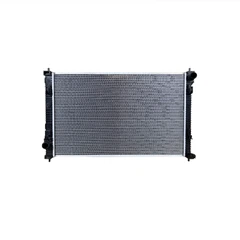
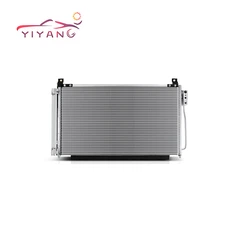
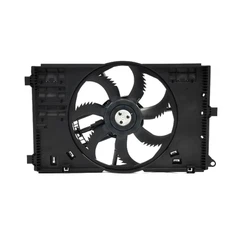

As a core component of a thermal management system, the performance and reliability of a radiator largely depend on its scientific composition methods and structural construction.A reasonable composition not only determines the efficiency of heat conduction and dissipation but also affects manufacturing feasibility, cost control, and environmental adaptability. In industry practice, the composition of a radiator can be summarized into four main elements: substrate, heat dissipation unit, medium channels, and fixing and auxiliary structures. The combination of each part is flexibly adjusted according to the heat dissipation form and application scenario.
The substrate is the initial heat-receiving surface, usually directly attached to the heat source. It requires materials with high thermal conductivity and good flatness to ensure rapid heat transfer to the radiator body. In the composition method, the substrate can be obtained through milling, die casting, or forging from a single piece of metal. The surface of the side in contact with the heat source is precision machined, and if necessary, a thermally conductive interface material is applied to reduce contact thermal resistance. Its shape and mounting hole positions must match the heat source and the overall structure to form a stable thermal connection and mechanical fixing base.
The heat dissipation unit is responsible for expanding the heat exchange area and improving heat exchange efficiency. Common forms include parallel fins, radial pin columns, corrugated fins, and microchannel structures. In air-cooled radiators, fins are often combined with the substrate by extrusion or insertion, enhancing air convection heat transfer by increasing surface area. Liquid-cooled radiators often have microchannels machined inside the substrate, allowing the coolant to directly contact high heat flux areas for efficient heat transport. The ratio of fin spacing to height must be considered during assembly to avoid airflow obstruction or excessive liquid pressure drop.
The medium channel is the carrier of heat transport. Air-cooled systems rely on airflow channels, formed by fin gaps and inlet/outlet air ducts. Liquid-cooled systems consist of internal channels and external piping forming a closed loop. During assembly, it is necessary to ensure a balance between sealing and fluid resistance to prevent leakage and localized hot spots. Fixing and auxiliary structures include mounting brackets, thermal clamps, fan mounts, and dust filters. Their function is to ensure overall rigidity and positional accuracy during assembly, while also considering ease of maintenance and environmental protection.
The overall design approach emphasizes clear functional zoning and optimized heat flow paths: the substrate collects heat, the heat dissipation unit diffuses and releases heat, the dielectric channels handle heat transfer, and auxiliary structures ensure stable operation. Different heat dissipation methods have different focuses in their compositional details. For example, high-power scenarios tend to favor integrated microchannel liquid cooling plates to reduce thermal resistance, while space-constrained scenarios prefer thin aluminum extrusion air-cooled structures to improve integration. Mastering these compositional logics allows for the optimal balance of performance, reliability, and economy during the design phase, providing efficient and robust thermal management support for various devices.