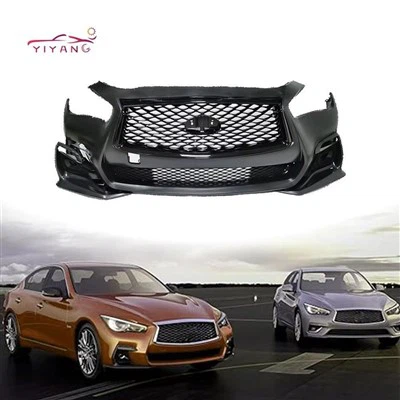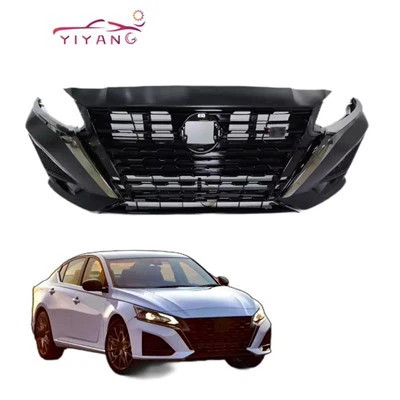
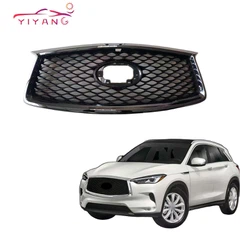
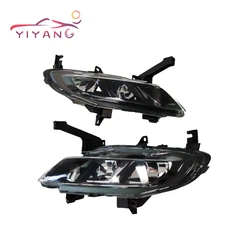
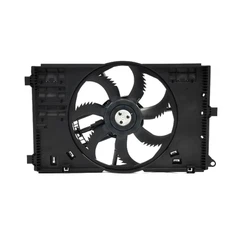
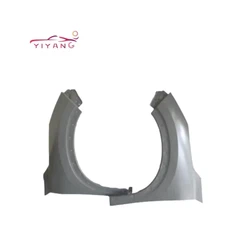
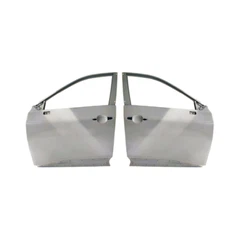

In the ever-evolving automotive industry, body kits, as the core carrier connecting design aesthetics and functional optimization, are becoming an important area for enhancing the overall value of vehicles. Through systematic adjustments to the vehicle's appearance, aerodynamic characteristics, and structural strength, they not only give models unique recognizability but also profoundly influence the balance between driving experience and engineering performance.
In terms of composition, modern body kits typically include external coverings such as front lips, side skirts, rear diffusers, and rear wings, as well as some internal components with reinforced structures. Among these, the design of aerodynamic components is particularly crucial-the front lip reduces airflow resistance at the front, the side skirts guide airflow smoothly along the body, and the rear diffuser accelerates airflow expulsion from the bottom. The combined effect of these three elements effectively increases downforce at high speeds, enhances tire grip, and reduces wind noise and energy consumption. Regarding material selection, carbon fiber composites, due to their lightweight and high strength, are gradually becoming the mainstream for high-end kits; fiberglass and ABS plastics, with their cost advantages, meet the needs of the mass market, balancing molding flexibility and durability.
In application scenarios, the positioning of body kits has expanded from simple "appearance modification" to "performance enhancement." For vehicles pursuing track performance, customized kits can optimize cornering stability and braking heat dissipation efficiency through precise aerodynamic calculations. For daily use, the low-drag design of the kits can reduce energy consumption during high-speed cruising, indirectly improving range (especially significant for new energy vehicles). Furthermore, some kits incorporate pedestrian protection concepts, reducing the risk of injury to vulnerable road users in collisions by optimizing corner curvature and energy-absorbing structures, reflecting advanced safety considerations.
It is worth noting that as global automotive regulations tighten compliance requirements for aftermarket parts, the development of body kits must simultaneously meet collision safety standards, environmental material limits, and labeling regulations. This is driving the industry towards "precise design + forward development," for example, using CFD simulation technology to simulate airflow fields or employing modular interfaces to achieve seamless matching with the original factory structure, ensuring that the installation of the kit does not affect the vehicle's original electronic systems and safety features.
Currently, the development of body kits is showing a trend of "deep integration of personalization and functionality." In the future, with the popularization of smart materials and 3D printing technology, kits may have adaptive adjustment capabilities (such as variable angle rear wings), further blurring the boundaries between "modified parts" and "original configurations", opening up more imaginative space for car design.