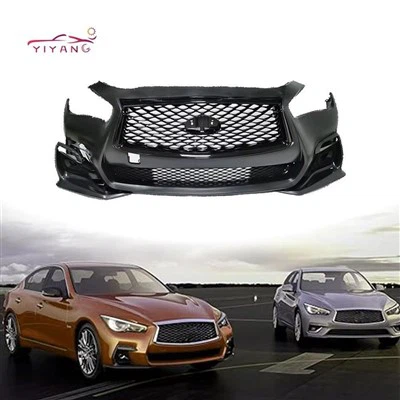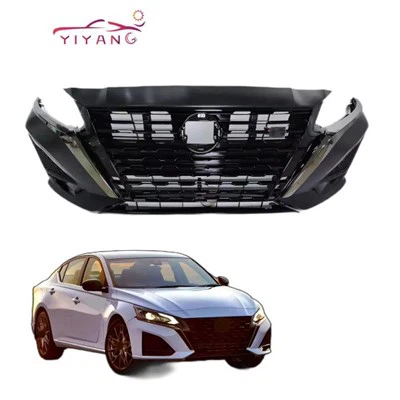
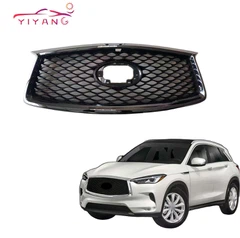
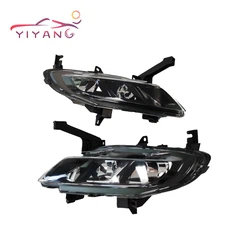
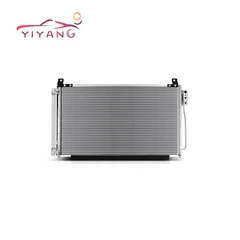
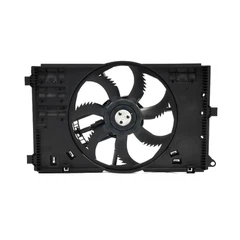
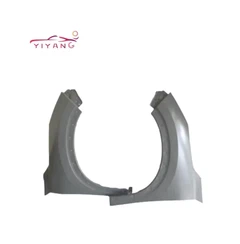
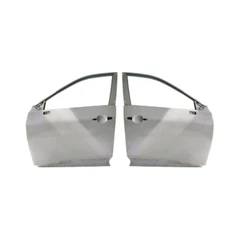

In the context of the automotive industry's diversification, personalization, and high-performance development, body kits, with their comprehensive advantages in engineering optimization, aesthetic shaping, and scenario adaptation, have become a key configuration for enhancing the overall value of vehicles. Their advantages are not only reflected in the direct performance gains, but also in the organic unity of function, safety, and individuality achieved through systematic design.
The primary advantage lies in the significant performance improvement. By introducing aerodynamic components such as front lips, side skirts, rear diffusers, and rear wings, body kits effectively streamline airflow across the vehicle, reducing lift and drag at high speeds, and improving tire contact and handling stability. In aggressive driving or high-speed cruising scenarios, this aerodynamic optimization translates into more precise steering feedback and shorter braking distances. Simultaneously, kits using high-strength, lightweight materials such as carbon fiber reduce unsprung mass, improving acceleration response and fuel efficiency, which is beneficial for both gasoline and new energy vehicles.
Secondly, body kits offer unique advantages in safety and protection. Some kits incorporate energy-absorbing structures or use impact-resistant materials, which can buffer external forces in low-speed collisions, reducing damage to the main body and lowering repair costs. Protective kits designed for specific operating environments, such as wheel arch protectors and underbody armor, effectively resist gravel, mud, and moisture erosion, extending the lifespan of critical components and improving vehicle reliability in complex road conditions. Furthermore, compliantly designed kits do not interfere with the normal operation of original factory lights, radar, and sensors, ensuring the effectiveness of active safety systems.
Third, body kits offer significant advantages in personalized expression and brand building. They provide a rich selection of styling languages and materials, allowing vehicles to break free from the homogenization of mass-produced designs and create a unique visual identity, satisfying users' pursuit of aesthetic taste and status. This differentiation not only enhances the emotional connection with car owners but also helps establish a distinctive product image within specific communities or markets.
Finally, body kits offer excellent adaptability to various scenarios. For different usage needs, racing-grade high-downforce kits can be configured to improve extreme handling, low-drag and energy-saving kits can be selected to optimize urban commuting efficiency, and protective reinforcement kits can be added to tackle off-road or outdoor challenges. Modular and replaceable designs further enhance the flexibility of use and lifecycle value.
In summary, automotive body kits, based on performance optimization, integrate multiple advantages such as safety protection, personalization, and scenario customization, giving vehicles higher engineering value and market competitiveness, and also promoting the evolution of automobiles from standardized transportation tools to diversified mobile spaces.