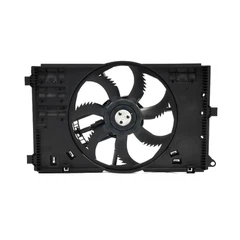
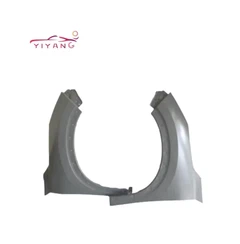
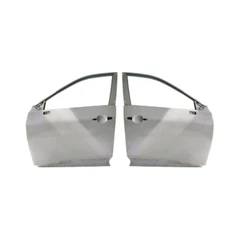

As the automotive industry evolves towards electrification, intelligence, and lightweighting, the seemingly traditional automotive mudguard is undergoing a new round of technological and application innovation. As a crucial component for vehicle protection and functional optimization, mudguards are no longer limited to simply preventing mud and water splashes. Instead, they exhibit distinct industry trends in materials technology, structural innovation, environmental requirements, and intelligent integration, bringing new value dimensions to vehicle design and user experience.
Firstly, the application of lightweight and high-performance materials has become the mainstream direction. While traditional steel mudguards possess good strength, their weight is relatively large, which is detrimental to improving overall vehicle energy efficiency. In recent years, engineering plastics (such as modified polypropylene (PP), nylon (PA), and ABS) have largely replaced metal materials in the passenger vehicle sector due to their advantages such as low density, impact resistance, ease of molding, and moderate cost. In high-end and new energy vehicles, the application of carbon fiber reinforced composite materials and glass fiber reinforced plastics is gradually increasing, not only further reducing weight but also improving weather resistance, UV resistance, and chemical corrosion resistance, meeting the requirements of complex environments and long service life. In the future, the development of recyclable and bio-based polymer materials will enable mudguards to be lighter while meeting green manufacturing requirements.
Secondly, structural design and functional integration are trending towards refinement and modularity. To adapt to the compact chassis layout, variable ground clearance, and higher aerodynamic requirements of electric vehicles, mudguards are evolving towards integrated designs with fenders, wheel arch liners, and battery protection structures. Optimizing surface morphology through CAE and CFD joint simulation can reduce wind resistance and noise while ensuring effective splash interception, thus improving range. Modular production models are also emerging, allowing vehicles on the same platform to quickly adapt to different tire specifications or suspension travel by changing partial components, shortening development cycles and reducing manufacturing costs.
Environmental protection and regulations are also shaping a new landscape for the industry. Increasingly stringent global standards for VOC emissions, recyclability, and hazardous substance limits are prompting companies to implement cleaner production in material selection, coating processes, and waste disposal. Technologies such as paint-free processes, laser-engraved textures, and biodegradable coatings are reducing pollution from painting processes and improving product recyclability. Meanwhile, in response to pedestrian protection and urban low-speed collision safety requirements, the structural stiffness and energy absorption characteristics of mudguards are being incorporated into vehicle collision safety design considerations, driving their more active role in passive safety.
Intelligentization and functional expansion are beginning to show their potential. Some high-end models have integrated mudguards with sensors, lighting, or signal systems, such as embedding blind spot monitoring radar or LED turn signals on the edges of the mudguards, giving them additional driver assistance information interaction functions in addition to protection. With the development of autonomous driving and vehicle-to-everything (V2X) communication, this type of integrated design is expected to improve the vehicle's perception capabilities and driving safety redundancy.
The digital upgrade of manufacturing and service models is also accelerating. 3D printing rapid prototyping technology shortens the new product development and verification cycle; intelligent manufacturing and online testing ensure the consistency and quality stability of mudguards with complex curved surfaces and composite materials; remote diagnostics and replaceable modular designs provide convenience for later maintenance and recycling.
Overall, the automotive mudguard industry is moving from traditional protective components towards lightweight, functional integration, environmental compliance, and intelligent connectivity. In the wave of industrial transformation, enterprises need to continuously increase investment in materials and structural innovation, deepen cross-system collaborative design, and actively adapt to green and intelligent trends in order to gain an advantage in future competition and provide solid support for the improvement of vehicle performance and sustainable development.