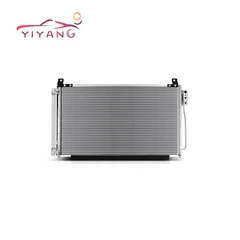

As a key component of heat exchange systems, condensers play a crucial role in refrigeration, air conditioning, chemical engineering, and energy recovery by efficiently condensing gaseous media and releasing latent heat. Their technological characteristics are not only reflected in the diversity of their structures and materials but also in continuous innovation in heat transfer mechanism optimization, operational adaptability, and energy efficiency improvement, providing reliable solutions for various industrial scenarios.
Structurally, condensers can be categorized into several types, including shell-and-tube, plate, air-cooled finned, evaporative, and microchannel condensers. Shell-and-tube condensers, with their high pressure resistance and wide range of applicable media, are commonly used in large-scale central refrigeration and petrochemical plants. Plate condensers, characterized by their high compactness and large heat transfer coefficient, are suitable for space-constrained applications with concentrated heat exchange requirements. Air-cooled finned condensers require no liquid cooling source, offer flexible installation, and are widely used in small and medium-sized commercial air conditioning and computer room cooling. Evaporative cooling, combining spray and air cooling, can achieve water-saving and efficient operation in arid or water-scarce regions. Microchannel condensers, due to their fine flow channels, light weight, and uniform heat exchange, are gradually being adopted in liquid cooling systems for high-power electronic equipment.
Material selection is a crucial component of condenser technology. Traditional carbon steel is low in cost but has limited corrosion resistance, and is mostly used in mild operating conditions. Stainless steel and copper alloys possess excellent thermal conductivity and corrosion resistance, making them suitable for high-purity or corrosive media environments. Aluminum alloys, due to their light weight and good thermal conductivity, are widely used in air-cooled and microchannel structures. Emerging composite materials and surface modification technologies further enhance the durability of equipment in extreme temperature and chemical environments.
In terms of heat transfer mechanisms, condensers utilize the latent heat of phase change to achieve efficient heat transfer, and their performance depends on the matching of the heat transfer coefficients between the condenser side and the cooling medium. Optimizing flow channel design, adding turbulence-inducing elements, or using enhanced heat transfer fins can significantly improve the heat transfer capacity per unit area. For liquid-cooled condensers, rationally allocating flow paths and velocities can reduce temperature unevenness and localized hot spots, improving overall thermal efficiency.
Operational adaptability and intelligent control are prominent features of modern condenser technology. Variable frequency drives for fans and pumps can automatically adjust their speed according to changes in heat load, reducing energy consumption under partial load. Online monitoring systems integrating temperature, pressure, and flow sensors can provide real-time feedback on operating status and support predictive maintenance. Under complex operating conditions, multi-mode switching and redundancy design enhance system reliability and reduce the risk of unplanned downtime.
The trend towards energy conservation and environmental protection is also driving the continuous evolution of condenser technology. Low-charge designs reduce refrigerant usage and lower greenhouse gas emissions; the combination of air cooling and evaporative cooling achieves water-saving goals in water-scarce regions; waste heat recovery condensers can use the heat released during condensation for preheating or other processes, improving overall energy efficiency.
In general, condenser technology is characterized by diverse structures, specialized materials, high heat transfer efficiency, intelligent controllability, and environmental friendliness, enabling it to maintain stable performance under varying operating conditions and stringent requirements. A thorough understanding of these technical characteristics helps improve energy efficiency and ensure reliable operation in engineering design and system optimization, providing solid support for the green development of modern industry.