
In modern industry and electronic equipment, heat sinks are crucial thermal management components ensuring stable equipment operation. Their core mission is to rapidly transfer excess heat generated by heat sources to the external environment, thereby suppressing temperature rise and maintaining performance and lifespan. A deep understanding of their working principles helps achieve more efficient thermal control in design and application.
The essence of a heat sink's operation is the coupling of a series of heat transport processes: conduction, convection, and radiation work together to migrate heat from the heat source to the distant environment. When a heat source comes into contact with the heat sink, heat is first conducted through molecular vibrations and free electron movement within the solid material. Metal materials, due to their high density of free electrons, can achieve high-speed heat diffusion at the microscopic level, resulting in a uniform distribution of concentrated heat within the heat sink substrate and fin structure.
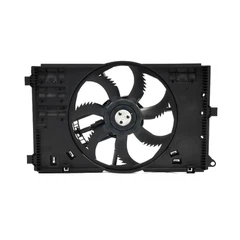
Subsequently, heat enters the convection phase. For air-cooled heat sinks, externally driven airflow passes over the fin surface, carrying away the heat in contact with the fins. Air expands when heated, decreases in density, and rises, creating natural convection. When supplemented with forced airflow devices such as fans, the flow rate and heat transfer coefficient can be significantly increased, enhancing heat dissipation. Liquid-cooled radiators utilize the high specific heat capacity and thermal conductivity of a liquid medium, circulating it through microchannels or liquid cooling plates driven by a pump to transfer heat to the heat exchanger or external cooling source, achieving a greater heat flux transfer.
Radiative heat transfer is enhanced at high operating temperatures. The radiator surface emits heat energy outward in the form of electromagnetic waves; the higher the temperature, the greater the radiation fraction. Therefore, the surface coating color and emissivity affect radiative heat dissipation capacity; dark, high-emissivity treatments can provide additional heat removal pathways in specific environments.
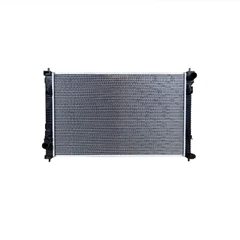
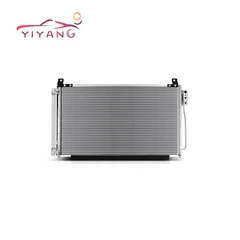
Structurally, radiators improve efficiency by increasing the heat exchange area-fins, micropillars, or grooves can expand the effective heat dissipation surface within a limited volume by several to tens of times, thereby outputting more heat under the same temperature difference. Material selection also determines the thermal conductivity rate; high thermal conductivity metals or composite materials can reduce internal thermal resistance, allowing heat to reach the heat exchange interface more quickly.
Overall, radiators rely on a multi-mechanism synergy of "heat conduction and collection, convection or phase change transport, and radiation assistance" to transform the local heat load of the heat source into a temperature level that the environment can tolerate. Understanding this principle allows for optimization of structural form, flow organization, and material matching under different operating conditions, enabling the construction of an efficient and reliable thermal management system that provides a solid guarantee for the continuous and stable operation of equipment.