
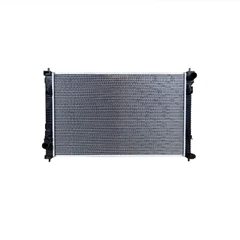

In the context of the rapid development of modern industrial equipment and electronic information systems, thermal management has risen from a supporting component to a key factor affecting performance and reliability.As a core component of the thermal management system, the proper understanding and effective use of radiators directly determines the stability, lifespan, and energy efficiency of equipment under continuous load. Faced with challenges such as high heat flux density, limited space, and variable environments, strengthening the understanding of their functional positioning and technical connotations has become an important issue in engineering practice and operation and maintenance management.
The essence of a radiator lies in transferring excess heat accumulated locally to the external environment through the synergistic effects of conduction, convection, and radiation, thereby preventing the temperature rise of the heat source from exceeding the safe threshold. Its efficiency depends not only on the thermal conductivity of the materials and structural design but also on the usage conditions, installation quality, and maintenance strategies. In many scenarios, performance bottlenecks do not originate from the radiator itself but rather from mismatches between the selected radiator and the characteristics of the heat source, excessively high thermal resistance during installation, or a lack of effective cleaning and maintenance over a long period. Therefore, establishing a comprehensive awareness from demand analysis to operational monitoring is essential to fully leverage its heat transport advantages.
In practical applications, it is crucial to assess the thermal compatibility between the heat source and the radiator. Appropriate types and specifications should be selected based on power density, allowable temperature rise, and operating cycle, avoiding the blind pursuit of high parameters that could lead to wasted volume, weight, or cost. During installation, ensure flat contact surfaces and uniform coating of the thermal interface material. Fixing methods should prevent substrate warping or uneven stress to maintain a low thermal resistance path. For air-cooled structures, maintain unobstructed airflow paths and regularly clean dust from the fins; for liquid-cooled structures, pay attention to medium quality and seal integrity to prevent scaling, air blockage, or leakage that weakens heat transfer.
Monitoring and maintenance during operation are equally essential. By tracking trends in parameters such as temperature and pressure differential, signs of performance degradation can be identified early and intervened promptly, shifting from reactive repairs to proactive prevention. Environmental adaptability is also critical. In high-temperature, high-humidity, dusty, or corrosive atmospheres, protective coatings, filtration devices, or special materials must be selected to ensure long-term reliability.
Overall, realizing the value of a radiator is a systematic project spanning selection, installation, operation, and maintenance. Strengthening thermal management awareness means incorporating it into the overall technical planning of the product lifecycle. This involves emphasizing the rationality of initial configuration, adhering to standardized usage processes, and prioritizing data-driven continuous optimization. Only in this way can a robust temperature control barrier be built in diverse application scenarios, providing fundamental guarantees for the efficient, safe, and long-term operation of equipment, and injecting continuous momentum into industrial technology upgrades and green, low-carbon development.