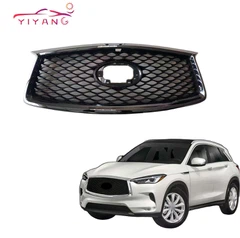
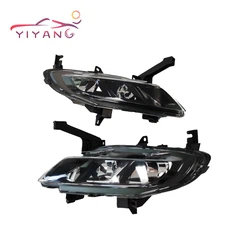
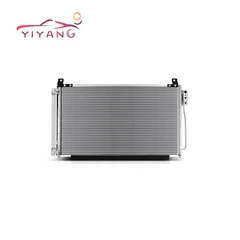
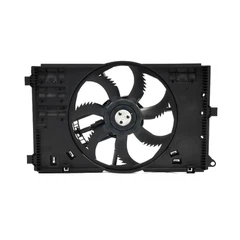
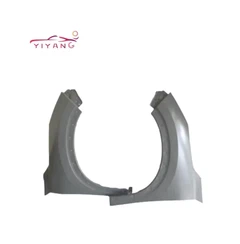
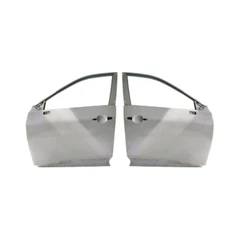

As core components for enhancing vehicle performance and aesthetics, automotive body kits are not simply a collection of scattered parts, but a systematic integration based on aerodynamics, materials mechanics, and overall vehicle engineering. A deep understanding of their structural logic helps grasp the design essence of "form follows function" in modern automotive modification and forward development.
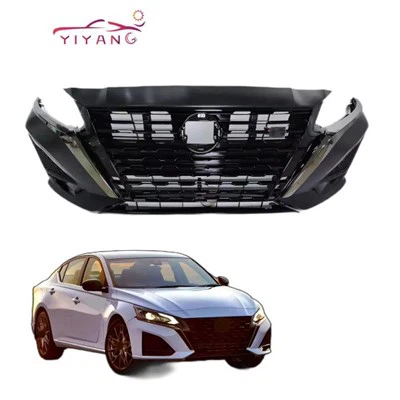
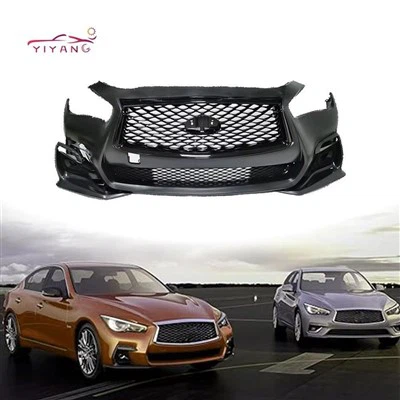
Structurally, body kits can be divided into three main modules: external body panels, aerodynamic components, and structural reinforcement units. External body panels, centered on styling, include front lips, side skirts, rear bumpers, and hood trim panels. They often employ curved transitions and seam designs to balance visual appeal and manufacturing feasibility. Their structure must consider both lightweight design and compatibility with original equipment manufacturer (OEM) installation locations, commonly using a combination of clips, bolts, and adhesive bonding to ensure dimensional stability under vibration conditions.
Aerodynamic components are the focus of structural design, typically including rear wings, diffusers, and front splitters. The rear wing typically employs an airfoil cross-section structure, utilizing Bernoulli's principle to generate downforce at high speeds through adjustable mounting brackets or a fixed tilt design. Its internal structure often incorporates reinforcing ribs to prevent deformation. The rear diffuser uses a tapered channel structure to accelerate airflow from the chassis, reducing drag in the negative pressure zone. Some high-performance versions integrate guide fins to optimize airflow separation points. The structural strength of these components must be verified through CFD simulation and wind tunnel testing to ensure no resonance or breakage risk under extreme conditions.
Structural reinforcement units are often hidden inside the body panels, such as the aluminum alloy anti-collision beam inside the front lip and the honeycomb energy-absorbing structure of the side skirts. Their function is to absorb energy in minor collisions, preventing damage to the main body. This design embodies a balance between "passive safety" and "lightweighting," often using high-strength aluminum alloys or composite materials, and reducing redundant structural mass through topology optimization.
Modern body kit structural designs also emphasize modularity and compatibility. Standardized interfaces and quick-release mechanisms enable rapid replacement of different functional components, adapting to diverse usage scenarios. Simultaneously, structural data must be aligned with the original manufacturer's CAD model to avoid installation deviations affecting sensor accuracy or aerodynamic performance. With the development of intelligent manufacturing technology, 3D scanning and parametric modeling can now achieve micron-level matching between the kit structure and the vehicle body, significantly improving assembly reliability.
Overall, the structure of automotive body kits is a dynamic unity of functional requirements, material properties, and manufacturing processes. In the future, with the application of intelligent materials and biomimetic structural design, its structure will evolve towards "adaptive adjustment" and "multi-functional integration," providing more efficient solutions for improving vehicle performance.