

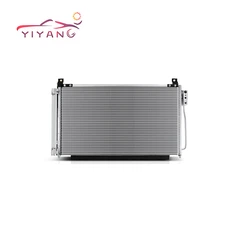

In numerous fields such as industrial refrigeration, HVAC, and energy and chemical engineering, condensers, as the core devices for condensing gaseous media and releasing heat, directly impact the energy efficiency, safety, and economy of the entire system. Facing common problems such as declining heat exchange efficiency, increased energy consumption, media leakage, and insufficient environmental adaptability, constructing systematic and targeted solutions is crucial to ensuring the long-term stable operation of equipment.
Regarding the problem of heat exchange performance degradation, a diagnostic system based on operational data should be established first. By monitoring changes in condensing pressure, temperature, flow rate, and energy consumption online, combined with the detection of fin cleanliness or the degree of scaling on the inner wall of the tube bundle, the causes of fouling, blockage, or abnormal flow resistance can be quickly located. For air-cooled condensers, a regular cleaning plan tailored to environmental characteristics should be implemented, using a combination of low-pressure air blowing and neutral cleaning agents to maintain fin permeability and smooth airflow. For water-cooled equipment, water quality management needs to be optimized, introducing softening, deoxygenation, and antibacterial processes, and chemical or physical cleaning should be performed according to water hardness and operating load cycles to restore the heat transfer coefficient.
In terms of energy consumption control, solutions need to encompass equipment matching and operational strategy optimization. Condenser type and specifications should be rationally selected based on heat load characteristics to avoid idle losses caused by oversized condensers or prolonged high-load operation caused by undersized condensers. For variable frequency drives (VFDs) of fans and pumps, control logic that automatically adjusts speed based on condensing load can be introduced to dynamically match airflow, water flow, and heat load, achieving energy-saving operation. Simultaneously, optimizing pipeline layout and flow channel design, reducing unnecessary bends and local resistance, can lower pump power and fan power consumption.
Leakage and reliability issues require a two-pronged approach: source control and process monitoring. During manufacturing and installation, the quality of welding, expansion joints, and flange seals should be ensured, and rigorous water or air pressure leak testing should be conducted before commissioning. During operation, temperature field and pressure wave monitoring can be deployed to achieve early warning of micro-leakage; corrosion-resistant alloys or anti-corrosion coatings should be used for easily corroded parts, and maintenance cycles should be established based on environmental characteristics to prevent material deterioration leading to leaks.
Improving environmental adaptability is also a crucial aspect of the solution. In high-temperature, high-humidity, or corrosive atmospheres, air-cooled condensers should be equipped with sunshades, airflow guides, and corrosion protection. In water-cooled systems in cold regions, robust antifreeze protection and heat tracing measures are necessary to prevent the medium from freezing and damaging the tube bundles. For special environments such as offshore or chemical plants, a fully sealed, inert gas-protected closed-loop system can be considered to improve equipment durability.
Overall, condenser solutions should be based on systemic diagnostics, integrating multiple measures such as cleaning and maintenance, energy efficiency optimization, leak prevention, and environmental adaptation, supplemented by data-driven management and preventative maintenance mechanisms. By scientifically integrating technical means and management methods, existing operational challenges can be effectively solved, and system thermal efficiency and operational reliability can be continuously improved, providing solid support for the green transformation and high-quality development of industry.