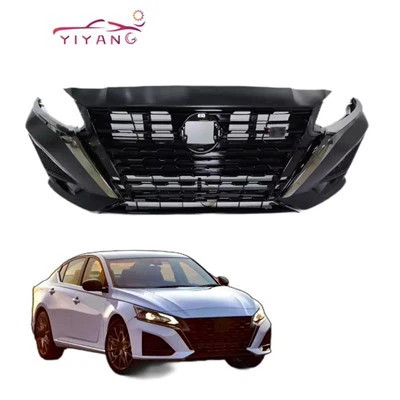

Car bumpers play a pivotal role in a vehicle's safety and functionality. Their proper application not only affects protective effectiveness but also influences the overall styling and long-term operating costs.In practice, a series of actionable techniques have been developed regarding bumper selection, installation, maintenance, and functional expansion. These techniques provide clear guidance for design, modification, and routine maintenance, ensuring maximum practical value.
In the selection process, the appropriate type should be matched to the vehicle's intended use and the specific scenario. Lightweight engineering plastic bumpers are suitable for urban commuter vehicles, balancing a streamlined design with low-speed collision energy absorption performance. Off-road vehicles or those used in complex road conditions require enhanced protection, such as models with metal skid plates or multi-point fixing structures, to improve scratch and impact resistance. Simultaneously, it is necessary to verify the consistency of structural interfaces, mounting holes, and electrical interfaces with the target vehicle model to avoid assembly difficulties or sensor function limitations due to specification incompatibility. For vehicles equipped with driver assistance systems, bumpers with adequate openings and viewing distances for radar and cameras should be prioritized to ensure unobstructed detection accuracy.
Installation requires precision and stability. Installation procedures should be strictly followed according to the manufacturer's or professional organization's specifications, ensuring the bumper is securely connected to the vehicle's longitudinal beams and energy-absorbing boxes. Loose connections can cause noise or displacement during driving vibrations, affecting aerodynamic performance and safety. Sensor models should be calibrated and functionally tested after installation to confirm that the detection range and response logic meet design requirements. Furthermore, pay attention to the connection between the exterior skin and the vehicle's paint; use specialized sealing strips or cushioning pads if necessary to prevent moisture and dust from seeping into the joints and causing corrosion or cosmetic deterioration.
Maintenance techniques emphasize prevention and timely intervention. Regularly inspect the bumper for cracks, scratches, or collapse of the energy-absorbing layer. Especially after minor collisions, promptly assess its structural integrity to avoid reduced protective capabilities due to hidden damage. When cleaning, use neutral detergents and soft tools to prevent damage to the surface coating from hard objects or corrosive liquids. For areas with radar or cameras, keep the lenses clean and regularly remove mud and snow to maintain the sensitivity of the sensing system. For vehicles exposed to UV radiation and acid rain for extended periods, consider applying a protective coating to the plastic skin to delay aging and fading.
Functional expansion must adhere to compliance and system compatibility principles. Within legal limits, accessories such as fairings and protective nets can be added to meet cooling or aerodynamic needs, but their impact on the airflow must be calculated to avoid increasing drag or causing sensor misjudgments. In off-road environments, auxiliary light brackets or winch supports can be added to the bumper, but the added load must be within the structural bearing capacity and safely isolated from the original vehicle's electrical system.
Overall, the application techniques for car bumpers encompass four aspects: scientific selection, precise installation, meticulous maintenance, and compliant expansion. Mastering these practical methods can extend service life, optimize functional performance, and maintain a harmonious unity between the vehicle's appearance and brand image, providing strong support for the efficient operation of the vehicle throughout its entire lifecycle, while ensuring safety performance.