



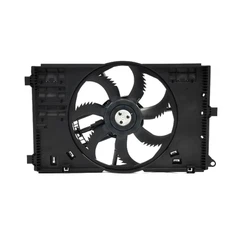

In a car's thermal management system, the radiator fan, though an auxiliary component, plays a crucial role in controlling the temperature of the engine and critical electronic devices. Understanding its functional characteristics and following scientific usage methods can effectively improve heat dissipation efficiency, extend component lifespan, and reduce operational risks caused by overheating. Below are some practical usage suggestions for car owners and maintenance personnel.
First, daily appearance and operational checks should be emphasized. The fan blades should be intact, without cracks or obvious deformation, and the surface should not be covered with large amounts of dirt, leaves, or insect remains, to avoid disrupting dynamic balance and reducing airflow. Start the engine and turn on the air conditioner to its maximum cooling setting. Observe whether the fan can enter high or low speed operation as expected while idling. Listen carefully for any abnormal friction noises or intermittent stopping, which are often signs of bearing wear or unstable motor power supply.
Proper use of the air conditioner and load control can help reduce the burden on the fan. In hot weather or during prolonged idling, moderately increasing the air conditioning temperature setting or briefly turning off the high-cooling mode can reduce the combined load on the condenser and radiator, preventing the fan from running at continuously high speeds, thus reducing energy consumption and noise. After heavy-load uphill driving or towing, avoid immediately turning off the engine. Utilize the fan delay function or allow it to idle for several minutes to help the coolant and critical components cool down sufficiently, preventing heat buildup and damage.
Parking environment also affects fan performance. Avoid extremely dusty or insect-infested areas to reduce blade and guard contamination. After driving through water or heavy rain, check the sealing of the fan motor junction box and connectors to prevent moisture intrusion leading to short circuits or corrosion. For vehicles equipped with electronic speed control, ensure that relevant sensors and ECU signals are functioning correctly to avoid premature fan start-up or delayed response due to temperature sensing errors.
For maintenance, it is recommended to clean the fan and radiator front area every one to two quarters. Use a low-pressure air gun to blow along the airflow direction, and gently wipe stubborn stains with a soft brush. Never use high-pressure water to directly spray the motor, as this may damage the insulation. If the fan is found to be sluggish, has unstable speed, or not turning at all, check the power supply voltage, relays, and control module promptly. Replace the corresponding parts if necessary. Do not force the vehicle to continue driving, as this may cause the engine to overheat and cause further damage.
Furthermore, when modifying or replacing the fan, pay attention to matching it with the original vehicle's thermal management logic. Blindly increasing the airflow while neglecting air pressure and noise control may disrupt the original airflow organization and even trigger system protection shutdown. Choose parts from reputable sources, ensuring that the size, voltage, and interface are consistent, and have them installed and adjusted by professional personnel.
Stable operation of the radiator fan requires careful observation, proper use, and regular maintenance. Mastering the above tips will allow you to fully utilize its cooling function in daily driving, providing a reliable temperature environment for the engine and vehicle electronic systems, thereby improving driving safety and durability.