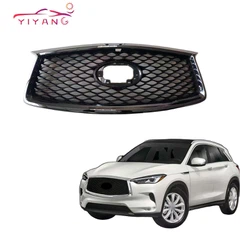
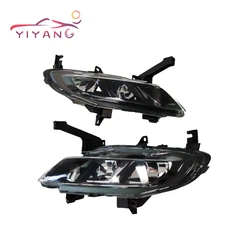

As the core device for visual interaction between a vehicle and its surroundings, vehicle lights must be designed and designed to accommodate the diversity of applicable environments.Different lighting conditions, climate characteristics, road types, and traffic scenarios place varying demands on the lighting efficiency, signal recognition, and durability of vehicle lights. Only by fully understanding and matching these applicable environments can vehicle lights stably perform their safety and functional value in various situations.
In nighttime and low-light environments, the primary task of vehicle lights is to expand the driver's field of vision and improve target recognition. In urban roads, where streetlights are densely distributed, the uniform and soft beam pattern of low beams can meet basic observation needs, while excessive brightness should be avoided to prevent oncoming glare. In suburban areas or highways without streetlights, the wide-area, high-brightness projection of high beams becomes necessary to detect distant obstacles, curves, and other road users in advance. In such environments, the luminous flux and effective range of the light source, as well as the rationality of the beam distribution, directly determine the driving safety margin.
Low-visibility weather conditions such as rain, snow, and fog place special demands on vehicle lights. In these conditions, suspended droplets or ice crystals in the air scatter light, and conventional light patterns are prone to diffuse glare, reducing visual clarity. Fog lights use narrow-angle, warm color temperature (usually yellow or amber) light sources, whose longer wavelengths are less easily scattered by particles, improving the vehicle's horizontal visibility and reducing upward reflection; when used in conjunction with low beam headlights, they balance road illumination with the vehicle's own visibility. These environments also require the lamp housing surface to have a hydrophobic, anti-fog coating or a ventilated structure to prevent moisture condensation from affecting light transmittance.
High temperatures and strong sunlight test the heat dissipation and weather resistance of vehicle lights. Prolonged exposure to intense sunlight significantly increases the internal temperature of the lamp body. Insufficient heat dissipation design can lead to accelerated light decay or even failure of LED or laser light sources. The proper configuration of high thermal conductivity materials, heat sink fins, and active cooling devices is crucial to ensuring stable operation of the light source under high-temperature conditions. Meanwhile, the outer shell material must possess excellent resistance to UV aging to prevent embrittlement, discoloration, or decreased light transmittance caused by prolonged exposure to sunlight.
Cold and icy environments emphasize the low-temperature start-up performance and structural freeze-resistance of the headlights. Low temperatures can cause some electronic drive components to respond slowly, and the brightness of the light source to drop instantaneously. Therefore, it is necessary to optimize the preheating management and low-temperature compensation algorithm of the drive circuit. Under icy conditions, the surface of the headlight housing or vents may be blocked by ice, affecting the internal humidity balance and optical performance. The application of low-temperature resistant sealing materials and anti-icing heating films can mitigate this risk. In addition, in areas where roads are salted for de-icing in winter, salt and de-icing agents easily adhere to the headlight housing and metal brackets, inducing corrosion. The material surface must have chemical corrosion resistance and be easy to clean.
Complex terrain and unpaved road environments require headlights to have stronger protection and mechanical durability. In off-road scenarios, vehicles often encounter impacts from flying rocks, tree branch scratches, and mud splashes. The headlight body should use high-impact-resistant materials and reinforced installation structures. Key optical components can be equipped with removable protective nets or plates. Meanwhile, due to terrain undulations and slope variations, the headlight beam angle needs a certain adjustable range to prevent premature beam interruption by slopes or obstacles.
In high-density urban traffic and intelligent driving scenarios, headlights must not only fulfill basic lighting and signaling functions but also collaborate with perception systems. Adaptive high/low beam systems use camera or radar information to partially block the beam in real time, avoiding interference with other road users; matrix or pixelated headlights can combine navigation and traffic data to achieve lane-level lighting and road information projection. Such environments require headlights with high-speed response electronic control systems and highly reliable data communication interfaces to ensure stable functioning in complex traffic flows.
Overall, the applicable environments for headlights encompass multiple dimensions, including light intensity, weather conditions, temperature ranges, terrain features, and traffic patterns. Designers and users must select matching light source types, optical solutions, material systems, and functional configurations based on specific environments and ensure performance compliance through rigorous verification testing. Only by achieving precise matching in environmental adaptability can headlights continuously play their core role in ensuring safety, improving efficiency, and enhancing interaction in various real-world scenarios.