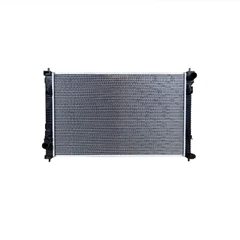

As a key component in a vehicle's power and thermal management system, the radiator plays a crucial role in efficiently dissipating excess heat generated during operation into the environment. Its performance directly affects the stable operating range, lifespan, and energy efficiency of the engine, motor, or electronic control system. In automotive engineering, the radiator is not only a heat exchange device but also a core guarantee for maintaining the thermal balance of the powertrain and preventing overheating failure.
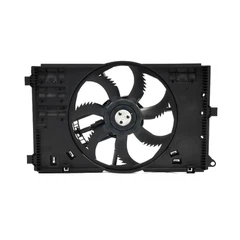
From a working principle perspective, the radiator relies on three basic heat transfer methods-convection, conduction, and radiation-to transfer heat. After absorbing heat in the engine or electric drive system, the coolant is transported to the radiator core by a circulation pump. The dense, fine channels and fins within the core greatly increase the contact area between the coolant and the air. When the vehicle is moving, cool air drawn in by the front grille flows through the core, exchanging heat with the high-temperature coolant, cooling the coolant before it re-enters the circulation. When the vehicle is stationary or operating at low speeds, the cooling fan forces airflow to maintain sufficient cooling airflow. This process requires radiators to achieve a balance between high thermal conductivity and low flow resistance within a limited space to ensure rapid system response and controllable energy consumption.
Structurally, modern radiators are mainly classified into tube-plate, tube-strip, and microchannel types. Tube-plate radiators combine flat aluminum tubes with corrugated fins; this technology is mature and low-cost, and is widely used in traditional internal combustion engine vehicles. Tube-strip radiators use slotted heat dissipation strips instead of corrugated fins to enhance airflow turbulence and improve heat exchange efficiency; they are commonly found in turbocharged engines with high heat dissipation requirements. Microchannel radiators improve heat exchange capacity per unit volume through smaller flow channel cross-sections, meeting the stringent requirements of hybrid and electric vehicles for compact layout and lightweight design. The materials used in radiators are also trending towards high performance; aluminum, due to its high thermal conductivity, low density, and ease of brazing, has become the mainstream material. Some high-end applications supplement key components with copper or composite materials to further enhance thermal conductivity.
Performance evaluation dimensions cover heat dissipation capacity, wind resistance characteristics, durability, and lightweight level. Heat dissipation capacity is typically measured in kilowatts (kW) of heat dissipated per unit time and requires comprehensive calibration considering cooling system flow rate, intake air temperature, and airflow velocity. Wind resistance characteristics affect power loss at high speeds; optimizing the core flow channels and fin spacing can reduce resistance without sacrificing heat exchange efficiency. Durability is reflected in resistance to corrosion, thermal fatigue, and vibration/shock, especially under conditions of road salt spray, thermal cycling, and long-term vibration; therefore, material surface treatments (such as anodizing and electrophoretic coating) and structural reinforcement design are crucial. Lightweighting not only reduces overall vehicle energy consumption but also improves the front-rear weight distribution, enhancing handling stability.
With the diversification of powertrain systems, the functional positioning of radiators is also expanding. In traditional gasoline-powered vehicles, it primarily serves engine cooling and the air conditioning/heating circuit. In hybrid vehicles, it must simultaneously handle the dual heat loads of the engine and electric motor, and consider heat distribution strategies under different operating conditions. Pure electric and fuel cell vehicles place even higher demands on the temperature control of the electronic control system, power battery, and power module, leading to the development of integrated thermal management modules. These modules coordinate the radiator with components such as heat pumps, cooling plates, and electronic valves to achieve efficient heat recovery and reuse. Furthermore, the introduction of intelligent thermal management systems allows the radiator to dynamically adjust fan speed and coolant flow based on real-time load and external environment, with the support of sensors and controllers, thereby optimizing energy efficiency while ensuring safety.
Advances in manufacturing processes continuously improve the overall performance of radiators. Vacuum brazing technology ensures high sealing and strength of the core and piping; automated assembly lines guarantee dimensional accuracy and consistency; and simulation-driven topology optimization can preview temperature and flow field distributions under different operating conditions during the design phase, shortening development cycles and reducing testing costs. Future trends also include the application of novel media such as graphene thermal conductive films and ceramic matrix composites, as well as the exploration of deformable or adjustable core structures to adapt to more complex thermal management scenarios.
Overall, radiators occupy a pivotal position in automotive powertrain and thermal management systems, and their technological evolution has consistently revolved around improving heat exchange efficiency, reducing energy consumption and weight, and enhancing environmental adaptability. As a fundamental component ensuring reliable vehicle operation and extending the lifespan of critical components, the development of radiators will continue to drive automotive thermal management towards higher efficiency, integration, and intelligence.