
In modern road traffic systems, vehicle lights, as the core device for visual communication between vehicles and the outside world, are far more important than ordinary components. They directly affect driving safety, traffic order, and system efficiency. They are both the "eyes" at night and in low-visibility conditions, and a clear signal source of vehicle intentions and status, playing an irreplaceable role in ensuring the safety of drivers and passengers and improving road traffic quality.
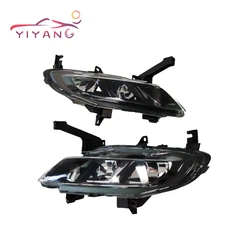
From a driving safety perspective, the primary function of vehicle lights is to provide reliable illumination. At night, when natural light is scarce and road outlines, obstacles, and pedestrian movements are difficult to discern, vehicle lights, through the appropriate projection of low and high beams, can significantly expand the driver's field of vision, allowing them to detect potential risks in advance and react accordingly. In low-visibility weather conditions such as rain, snow, and fog, the penetrating light of vehicle lights can improve the vehicle's own visibility, enabling other road users to promptly perceive its position and trajectory, thereby reducing the probability of collisions. Numerous traffic accident statistics demonstrate that insufficient lighting or improper use of lights is a major contributing factor to accidents at night and in inclement weather, highlighting the dual value of vehicle lights in both passive protection and active warning.
In terms of traffic order and signal transmission, vehicle lights play a crucial communication role. Turn signals clearly indicate a vehicle's intention through flashing patterns, providing surrounding vehicles and pedestrians with a basis for prediction; brake lights illuminate immediately when decelerating or stopping, warning following vehicles to maintain a safe distance; side marker lights and taillights mark the vehicle's outline in low-light environments such as dusk and tunnels, preventing lateral or rear-end collisions. In recent years, with the development of intelligent lighting technology, adaptive high beam systems can automatically switch beam patterns according to oncoming traffic conditions, ensuring the driver's visibility while avoiding interfering with others; matrix LED headlights can even achieve partial shading, illuminating the road ahead while reducing glare for specific targets, further improving the safety and civility of traffic interactions.
The importance of vehicle lights is also reflected in their support for the overall efficiency of the traffic system. Good lighting conditions improve vehicle speed stability and lane-keeping accuracy, reducing frequent deceleration or lane changes caused by poor visibility, thereby improving road capacity. In highway and urban expressway scenarios, standardized lighting rules and performance standards help different vehicles develop a consistent visual language, reducing traffic congestion or conflicts caused by misunderstandings. Furthermore, the integration of vehicle lights with intelligent driving perception systems (such as the information linkage between headlights and cameras/radar) provides necessary environmental perception supplements for the reliable operation of autonomous and assisted driving functions, driving the evolution of transportation systems towards greater safety and efficiency.
Regulations and standards further strengthen the fundamental role of vehicle lights. Motor vehicle safety technical specifications in various countries set strict indicators for the light distribution performance, installation location, operating conditions, and durability of vehicle lights to ensure stable operation under specified conditions. These standards are not only the baseline for product quality but also a technical consensus for ensuring public safety, reflecting the fundamental role of vehicle lights in the traffic management system.
In conclusion, with its lighting, signaling, and interactive functions, vehicle lights are an indispensable component of the automotive safety system and a crucial support for the efficient and orderly operation of the transportation system. Continuously improving the performance and intelligence level of vehicle lights has profound practical significance and strategic value for reducing accident risks, optimizing traffic efficiency, and promoting the development of intelligent transportation.